YRM PROP vs BlueGuardianFutures.com 2026: Professional Evaluation for Risk Control and Long-Term Fit | prop.best
Hero image slot
Drop a featured image here later without changing the surrounding article structure.

Hero image slot
Drop a featured image here later without changing the surrounding article structure.

A professional evaluation of two prop firms should be less about who has the loudest marketing and more about which account structure supports long-term consistency. Traders often make the wrong choice because they focus on headline promotion instead of operational fit. That is a mistake. In futures prop trading, rule structure, drawdown behavior, payout workflow, and the emotional cost of account management matter more than any isolated feature. A trader can be profitable in a vacuum and still fail an evaluation because the account mechanics do not match the way the trader naturally works.
YRM PROP and BlueGuardianFutures.com should therefore be reviewed as risk systems. A risk system either helps the trader preserve capital or it quietly creates friction that turns good decisions into costly ones. The evaluation below is built around that idea. It examines the practical evidence a trader should collect before deciding where to place capital, effort, and trust. It is especially useful if you already know your trade frequency, stop size, and typical session behavior, because those are the variables that most often decide whether a firm is a fit or a trap.
Every serious trader should start by asking whether the firm fits the process they already use. If your strategy is built on a few precise setups per day with tight risk control, a fairly structured firm may be ideal. If your strategy needs more flexibility, you may need a different model. The key is not to force your strategy to conform to the account. The goal is to find an account that allows your strategy to operate naturally, because strategies tend to degrade when traders constantly modify them to satisfy administrative rules.
This is where many evaluations go wrong. Traders ask whether the firm is reputable, but they do not ask whether the firm is operationally compatible. A firm can be legitimate and still be a poor fit. You want to know whether your average stop fits comfortably inside the allowed risk envelope, whether your expected session count aligns with the daily rhythm of the account, and whether the account design would still make sense after a losing week. If the answer to those questions is weak, the firm is not really helping you trade.
Risk control is the most important category because it determines how much room the trader has to make normal mistakes. In futures trading, normal mistakes happen all the time. A trade may start slowly and only later develop. A session may begin with two small losses before the right setup finally appears. A market may expand and contract in ways that make the first clean entry slightly uncomfortable. A good prop structure anticipates those realities. A poor one punishes them too quickly.
When evaluating YRM PROP and BlueGuardianFutures.com, look at the account in terms of tolerance bands. How much noise can the account absorb? How much room do you have after a routine stop-out? If the answer is too little, then even a good strategy will struggle. Traders often assume that a tighter account makes them safer, but that is only true if the strategy is built for it. If the strategy needs room to breathe, a tight account can increase emotional pressure and cause the trader to make worse decisions than they would in a slightly more forgiving environment.
A payout model is more than a financial detail. It shapes behavior. If the path to withdrawal is clear and predictable, traders can focus on process. If the path feels vague or mechanically awkward, traders start making decisions around the payout instead of around the trade. That is a subtle but important problem. The right firm should help the trader feel in control of the process rather than constantly wondering what unlocks the next step.
Progression also affects psychology. Traders perform better when they can see that careful execution leads to measurable advancement. The firm should encourage that connection. If a trader must constantly think about hidden conditions, unclear timing, or ambiguous account behavior, the emotional load rises. Long-term fit is not only about whether the firm is fair. It is also about whether it supports confidence through clarity. Confidence is not a luxury in prop trading. It is part of the operating system.
Operational friction is the sum of all the small things that make a trader work harder than necessary. It includes how easy the rules are to remember, whether the risk model is intuitive, how much time is spent interpreting account status, and how often the trader must check the rules again because the structure feels opaque. A firm with lower friction is usually easier to trade well. A firm with high friction may still be usable, but it will consume more mental energy. That matters because mental energy is limited and should be spent on market analysis, not administrative uncertainty.
To evaluate this properly, look at the firm as if you were logging every step of the process. How quickly can you tell whether the account is healthy? How easily can you estimate the consequences of a losing trade? How much ambiguity exists around the next phase of the program? The trader who can answer those questions clearly usually handles the account better than the trader who only compares price or branding. The smoother the workflow, the fewer opportunities there are for avoidable mistakes.
Some traders are naturally suited to rule-heavy environments because they already trade with structure. They keep precise journals, accept small losses quickly, and do not need much flexibility. Others are more adaptive and need room to adjust size, session timing, or stop placement as volatility changes. Neither type is inherently better. The problem appears when the trader chooses a firm that rewards the opposite behavior. That is when a good setup becomes a bad experience.
If you are highly selective, patient, and deliberate, you may benefit from a firm that quietly reinforces the same discipline you already practice. If you are still learning to control overtrading or emotional size escalation, you may need a structure that makes those mistakes expensive enough to fix. Both YRM PROP and BlueGuardianFutures.com should be judged by that standard. Which one helps your current behavior become more professional? Which one forces you to trade cleaner? Those are the meaningful questions.
Rule transparency is important because ambiguity is expensive. A trader who misreads a rule does not just lose a trade; the trader may lose the entire evaluation window or create a chain of unnecessary resets. For that reason, the firm should be easy to understand in a single reading. If the trader must constantly interpret edge cases, the firm is adding cognitive load that has nothing to do with actual market skill. In professional trading, clarity is a competitive advantage.
When evaluating the two firms, check whether the important constraints are obvious. Can you see the drawdown behavior without guessing? Can you tell whether the account is aligned with your holding time? Can you tell when and how payouts become available? If the answer is yes, the firm has an operational advantage. If the answer is no, you are paying not only with money but with attention. Attention is a scarce resource. A firm that wastes it is not as good as one that preserves it.
The best prop firm is not necessarily the one that gets you funded the fastest. It is the one that lets you stay funded. Longevity depends on whether the trader can survive losing sequences without changing the strategy out of fear. It depends on whether the account rules remain tolerable after the first few setbacks. It depends on whether the trader can maintain the same level of discipline after a profit run. If a firm makes those phases harder than necessary, the trader will eventually feel it.
Long-term fit also includes the psychological cost of maintaining the account. Some traders are comfortable with highly specific constraints. Others find them draining. Neither response is wrong. But if a trader is exhausted by the account model, the edge tends to degrade over time. That is why the evaluation should include a realistic assessment of emotional sustainability. Can you imagine operating in this environment for three months, six months, or longer? If the answer feels shaky, that is a warning sign worth respecting.
There are six criteria I would use in a real evaluation. First, does the firm’s risk model fit your average stop size? Second, does the account allow your normal trade frequency without creating unnecessary tension? Third, is the payout logic clear enough that you can plan around it? Fourth, is the workflow simple enough that you can focus on the market rather than the rules? Fifth, does the structure reduce emotional mistakes? Sixth, would the account still make sense after a normal losing week? If the answer is yes to most of these, the firm is probably a reasonable fit.
That list is more useful than reputation chatter because it ties the firm directly to your trading process. A trader who can answer these questions honestly is much less likely to choose the wrong environment. The real objective is not to find the best firm in the abstract. The objective is to find the best fit for the strategy you actually trade.
| Category | What To Ask | Why It Matters |
|---|---|---|
| Risk envelope | Does my stop fit comfortably inside the drawdown model? | Protects the strategy from structural mismatch |
| Workflow | Can I understand the account without rereading the rules every session? | Reduces cognitive friction |
| Payout logic | Can I plan withdrawals without guessing? | Supports consistent decision-making |
| Longevity | Would this still work after a losing streak? | Measures long-term sustainability |
If a firm scores poorly in more than one of those categories, I would not treat it as a serious contender, regardless of how attractive the initial promotion looks. A long-term funded career is built on repeatable behavior, not impulse decisions.
One of the best ways to evaluate a firm is to imagine three stress tests. The first test is a modest losing streak. The second is a volatility spike that hits after you have already taken a loss. The third is a month where your performance is flat and you are tempted to force action. A good prop structure should remain manageable in all three scenarios. If it becomes psychologically heavy in any of them, that is evidence that the fit may not be strong enough for a long-term relationship.
The point of stress-testing is not to be pessimistic. The point is to be realistic. A firm that looks fine during ideal conditions may become a source of friction when conditions normalize. Traders who prepare for stress tend to make better selection decisions and better execution decisions. That is one reason why professional evaluation is so valuable. It forces you to think ahead rather than react after the account is already under pressure.
Another useful question is whether the firm helps or hurts your journaling habit. Some environments make it easy to track trades, review mistakes, and stay organized. Others make the process feel messy. If the account encourages better record keeping, it indirectly supports performance. If it makes records harder to maintain, it quietly weakens your ability to improve. Good traders should value tools that improve self-review, because self-review is where edge development really happens.
One more angle is the cost of learning inside the firm. If the environment lets you discover rule mismatches early, that saves time and capital. If it makes every mistake more expensive because the rules are hard to interpret, the learning curve becomes longer and more frustrating. A strong evaluation should therefore ask which firm is more likely to reveal your weaknesses in a useful way. The best environments do not hide your errors. They make them visible quickly so you can correct them before they become expensive habits.
You should also think about how the firm behaves in the middle of your development curve. The early stage is about learning the rules. The middle stage is about preserving confidence after a few setbacks. The later stage is about protecting consistency when the account is live and there is real money at stake. A firm that supports all three stages is better than one that looks appealing only at the beginning. The trader who understands this will usually make a wiser choice than the trader who only compares challenge pricing.
In practice, the evaluation should end with a simple question: if I had to trade my current strategy for the next six months, which account would make it easier to remain disciplined? That is the question that matters. Everything else is secondary.
In a real trading business, the strongest decision is often the least dramatic one. Traders who choose the environment that best matches their current process usually experience fewer unnecessary resets, fewer emotional mistakes, and a cleaner path to consistency. That is why this evaluation is not just about labels or brand identity. It is about matching the account to the actual mechanics of the trader. The best-looking option is not always the best operating environment.
The discipline to choose the simpler, clearer, and more sustainable structure is itself a professional skill. Over time, that skill matters as much as trade selection. A trader who can evaluate an account honestly will usually protect capital better than one who chooses on impulse. That is the standard I would use every time.
YRM PROP and BlueGuardianFutures.com should both be judged by the same standard: which one helps the trader preserve capital, reduce rule friction, and trade more consistently over time? If one firm clearly matches your style, that is the correct choice. If both are close, choose the simpler operating environment first. Simplicity usually wins when the goal is disciplined execution inside a prop account. The right firm is the one that makes your best trading easier and your worst habits harder to repeat.
Internal links: Risk Management, Prop Firm Review, Prop Firm Database.
If you want to test these firms directly, use the buttons below. The coupon code for both offers is propbest.
Coupon: propbest

Inline image slot
Use this reserved slot for a later supporting image, infographic, or chart.
Fit between your actual strategy and the firm’s rule mechanics.
No. Flexibility only helps if it supports disciplined execution rather than inviting mistakes.
No. Marketing is not a substitute for rule clarity or long-term fit.
Disclosure: This article includes affiliate links to prop trading firms. If you sign up through these links, prop.best may earn a commission at no extra cost to you. We only recommend products and firms we believe are relevant to the trading context discussed here.
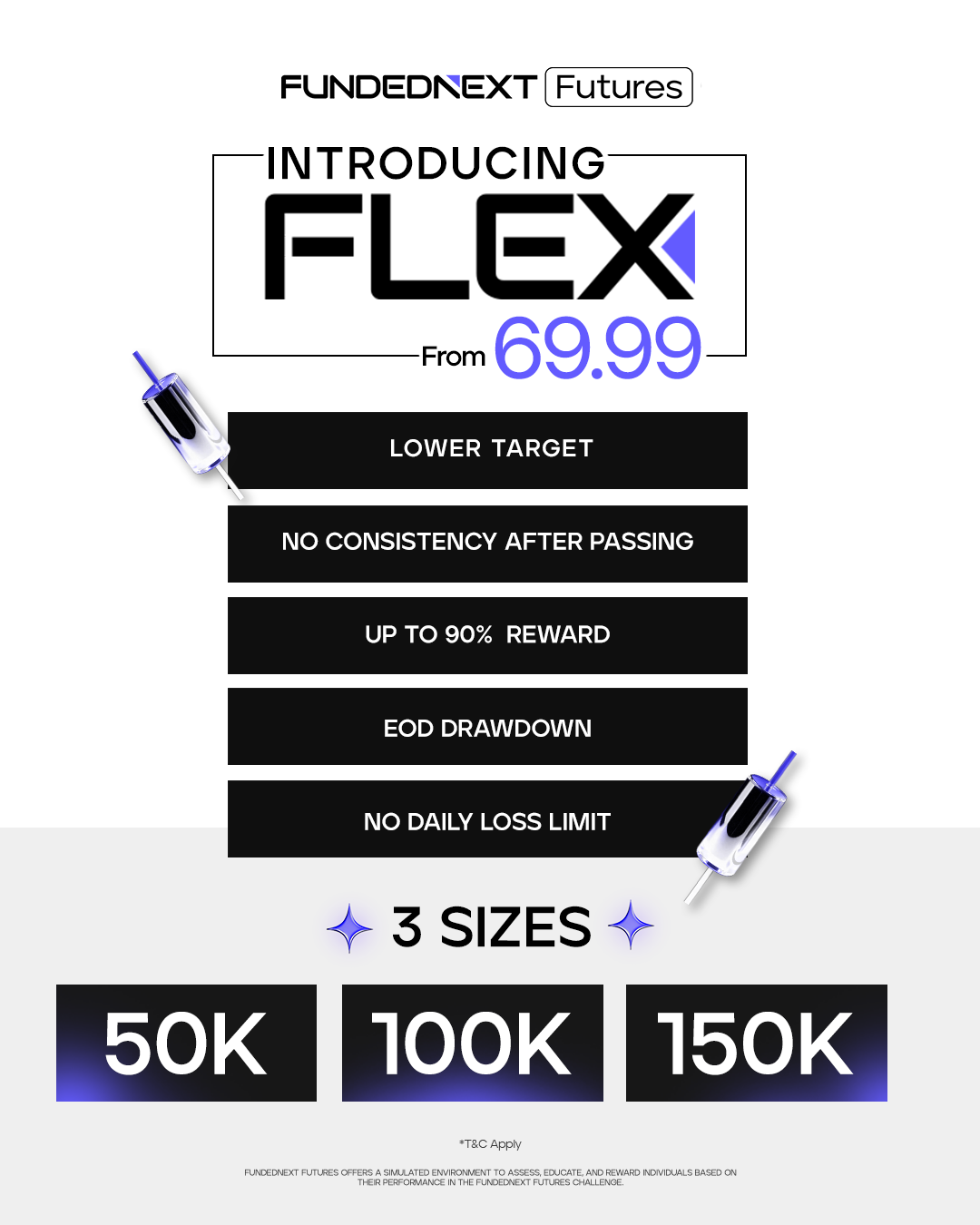
Pass the evaluation and get funded up to $200k today. 90% profit split.
Claim Discount