YRM PROP vs BlueGuardianFutures.com 2026: Deep Comparison for Serious Futures Traders | prop.best
Hero image slot
Drop a featured image here later without changing the surrounding article structure.

Hero image slot
Drop a featured image here later without changing the surrounding article structure.

When a trader compares YRM PROP with BlueGuardianFutures.com, the real decision is not about branding, social media presence, or who looks more aggressive in promotion. The decision is about rule architecture, execution tolerance, and how well the account model fits the trader’s actual behavior under stress. In prop trading, the wrong fit can turn a profitable edge into a frustrating sequence of avoidable violations. That is why a serious comparison has to look beyond marketing and examine the mechanics that shape decision-making, including drawdown style, payout expectations, platform friction, and the practical cost of recovery after a losing streak.
Both firms should be evaluated as systems rather than slogans. A firm’s account structure can help a disciplined trader scale efficiently, or it can punish perfectly valid trading if the rules are misaligned with the strategy. Traders who hold for short bursts, use tight invalidation, and keep risk capped tend to benefit from one type of model. Traders who need more breathing room, a slower tempo, or wider stops often need a different structure. The comparison below is designed to help you identify where the fit is strong and where the risk of mismatch is highest.
Most traders make the mistake of comparing prop firms as if they were consumer products with a single best answer. That approach breaks down quickly because the best firm is the one that makes your strategy easier to execute. A professional comparison should assess four things at once. First, it should identify how much room the account gives you to be wrong without triggering a hard violation. Second, it should determine whether the payout model and progression path support the way you plan to trade. Third, it should reveal how much operational friction exists during the normal trading day. Fourth, it should ask whether the firm’s mechanics encourage discipline or provoke overtrading.
That framework matters because the same trader can perform very differently across firms. A setup that tolerates a small stop and quick exit may do well under tighter controls, while a slower mean-reversion method may fail simply because the account structure punishes the natural noise of the strategy. The point is not to make prop trading sound more complex than it is. The point is to make the evaluation honest enough that you do not confuse a rule mismatch with a strategy problem.
YRM PROP and BlueGuardianFutures.com should both be examined through the lens of behavior design. If a ruleset feels restrictive, it is not automatically a bad ruleset. Restriction can be useful when it reduces the odds of emotional decision-making. The problem appears when the restriction is misaligned with the trader’s edge. For example, a trader whose best entries require patience and slightly wider invalidation may struggle under any model that penalizes normal fluctuation more aggressively than the strategy can absorb. On the other hand, an impatient trader may benefit from a structure that discourages random size escalation and forces more deliberate execution.
That is why the best firms are often the ones that make good behavior easier and bad behavior harder. If your process is built around fixed risk, one or two high-quality setups per session, and a strict daily stop, then a model with clear boundaries can improve your results by reducing noise. If your process depends on scaling into trends, holding through a broad intraday swing, or adapting quickly to changing volatility, you need to understand whether the account model gives enough operating room. A firm is not good because it is strict. A firm is good because the strictness improves decision quality rather than distorting it.
Traders often compare headline pricing and ignore the real cost of failure. The true evaluation cost is not just the fee you pay to start the challenge. It is also the time lost, the emotional cost of repeated resets, the opportunity cost of trading under stress, and the risk of changing your strategy to fit the rules. If YRM PROP offers a structure that better supports your current trade frequency, it may become the more economical option even if the nominal fee is not the lowest. If BlueGuardianFutures.com offers a better path for your stop size and session rhythm, the firm may be the smarter choice even when the front-end cost is slightly higher.
That is why traders should think in terms of recovery economics. How many days or sessions does it take to recover from a normal losing sequence? How quickly can you rebuild after a small violation or failed attempt? What does it cost to start over if your first few weeks reveal a mismatch? These questions matter because the cheapest account on paper is not necessarily the cheapest account in practice. In a professional evaluation, price is only one input. Rule fit and recovery speed are equally important, and in many cases they matter more.
Another factor traders underestimate is the platform environment. Some traders are comfortable with fast execution, lightweight decision support, and minimal hand-holding. Others prefer a cleaner interface, easier trade tracking, and a path that reduces manual friction. The right prop firm should support the way you already operate, not require you to reconstruct your process from scratch. If one firm’s environment makes it easier to monitor risk in real time, you are less likely to drift into an emotional position. If the interface is clumsy or the data flow is hard to read, even a good strategy can become harder to execute cleanly.
Execution fit also includes how you manage session timing. A trader who specializes in the open, the lunch rotation, or the final hour should examine whether the account rules create pressure during that window. You do not want a good setup to become a bad trade because you spent too much mental energy worrying about the account status. Strong firm fit means your attention stays on market structure, not on trying to decode your own account behavior while a live trade is moving.
This is the section that usually decides the comparison. Every trader should know exactly how their average stop, average adverse excursion, and average holding time interact with a firm’s drawdown mechanism. If your trades normally require a stop beyond a local swing, you need enough cushion for that noise. If your setup works because it uses a very tight stop and quick invalidation, the same cushion calculation will look different. That is why one trader can call a firm fair while another trader calls it impossible. The firm did not change; the strategy did.
Normal variance is especially important in futures trading because intraday movement can expand abruptly. A healthy setup may look weak for five to ten minutes before trend continuation appears. If the account cannot survive that normal fluctuation, the trader is not really trading the edge; the trader is negotiating with the drawdown clock. Before choosing between YRM PROP and BlueGuardianFutures.com, map your strategy against the worst routine movement you expect to see in your sample. If the account cannot support that movement, the firm is structurally misaligned with your method.
Payout structure matters because it affects how a trader behaves after a profitable phase. If the payout rules are clear and the capital path feels consistent, traders can focus on process. If the payout process is confusing, delayed, or heavily conditioned on variables the trader cannot control, confidence erodes. A professional comparison should ask whether the firm’s payout logic encourages patience or creates unnecessary urgency. If a trader is constantly thinking about how to unlock the next withdrawal, the account can become emotionally expensive even when the strategy is working.
Long-term sustainability also depends on whether the firm encourages overconfidence after a good run. A healthy model supports gradual progression, measured risk, and a habit of preserving gains. A weak model may tempt traders to increase size too early or ignore process once they have recovered from a setback. In practice, the best firm is the one that lets you compound consistency without introducing a hidden incentive to take stupid risk. That is the standard you should use when comparing these two names.
YRM PROP is likely to appeal to traders who already have a stable process and need a firm that rewards discipline more than aggressiveness. If you keep one or two setups per session, respect your stop every time, and review your trade journal with real seriousness, a rules-first environment may fit you well. Traders who dislike chaos, who prefer to operate from a clear playbook, and who want the account to act as a guardrail rather than a playground often do better in that kind of structure.
It can also be a good fit if your edge is based on patience. Traders who wait for a very specific location, a clean candle sequence, or a meaningful session context tend to benefit from firm models that do not encourage random overactivity. The hidden advantage is mental clarity. If the account structure reduces the number of decisions you have to make, your energy stays available for the decisions that matter. That usually improves consistency over time.
BlueGuardianFutures.com is likely to appeal to traders who want clear account logic and who value understanding the firm as a repeatable operating system. Traders who run a structured workflow, log every trade, and think in terms of edge preservation often prefer environments where the mechanics can be modeled precisely. If your trading is already disciplined and you want a ruleset that reinforces that discipline instead of distracting from it, BlueGuardianFutures.com may be the stronger fit.
That said, fit is not only about style. It is also about where you are in your development. A trader still learning to control position size may benefit from the structure of a firm that makes risk mistakes expensive enough to be memorable. A trader with a mature process may value a more flexible path. The better firm is the one that matches the trader’s current stage, not the one that sounds more impressive in a headline.
When you make the final call, use a decision matrix rather than intuition. Score each firm on rule clarity, drawdown tolerance, platform comfort, payout practicality, and strategy compatibility. Then compare those scores against your own live journal. If the result is close, trade the simpler environment first, because simplicity reduces the odds of preventable mistakes. If one firm clearly matches your average stop structure and session style better, that is usually the right one even if the other firm has a more attractive marketing presentation.
A strong decision matrix should also include a failure review. Ask which firm would be easier to recover with after a loss streak. Ask which environment would make you less likely to size up too quickly. Ask which account would help you preserve confidence if the market gets choppy and the normal rhythm of your setups changes. These questions do not sound exciting, but they are the ones that matter most in real prop trading.
If the answer to the last question is negative, the firm is probably not a good long-term fit, even if it looks attractive on paper. In prop trading, emotional load is a real cost. It influences size, patience, decision speed, and how long you can remain consistent.
A trader should also think about the cost of learning inside each environment. If one firm allows you to identify a rule mismatch earlier, that can be worth more than a slightly lower entry fee. Early clarity reduces wasted effort. It also protects confidence because the trader learns from the account instead of guessing why performance changed. In practice, the best firms are the ones that reveal the truth about your process quickly and cleanly.
Another important point is emotional durability. A prop account should not feel like a constant negotiation with rules you do not understand. The more you have to mentally translate the environment before you place a trade, the harder it becomes to maintain flow. Professional traders try to reserve their cognitive effort for the market, not for remembering account exceptions. That is why clarity and simplicity are not cosmetic features. They are performance features.
Finally, compare how each firm would feel after a normal drawdown cycle. A firm is easy to like when the account is up. The real test comes when the trader has a few failed setups, the confidence curve dips, and the next trade requires discipline rather than excitement. If a firm helps you remain methodical during that phase, it has real value. If it pushes you toward haste or frustration, the apparent opportunity is less useful than it seems.
The better choice between YRM PROP and BlueGuardianFutures.com is the one that best matches your actual trading behavior. If your process is tight, selective, and disciplined, either firm can be workable. If your process is still unstable, you need the one that creates fewer opportunities for error and gives you a cleaner path to consistency. That is the professional way to evaluate a prop firm: not by reputation alone, but by the degree to which the account structure helps your edge survive in real market conditions.
Internal links: Risk Management, Prop Firm Review, Prop Firm Database.
If you want to test these two firms directly, use the buttons below. The coupon code for both offers is propbest.
Coupon: `propbest`

Inline image slot
Use this reserved slot for a later supporting image, infographic, or chart.
Whether the firm’s rule structure supports your actual stop size and trade frequency.
No. Fit generally matters more than the front-end fee because a mismatch is expensive over time.
Yes, but only if the strategy’s risk profile aligns with the account mechanics.
Disclosure: This article includes affiliate links to prop trading firms. If you sign up through these links, prop.best may earn a commission at no extra cost to you. We only recommend products and firms we believe are relevant to the trading context discussed here.
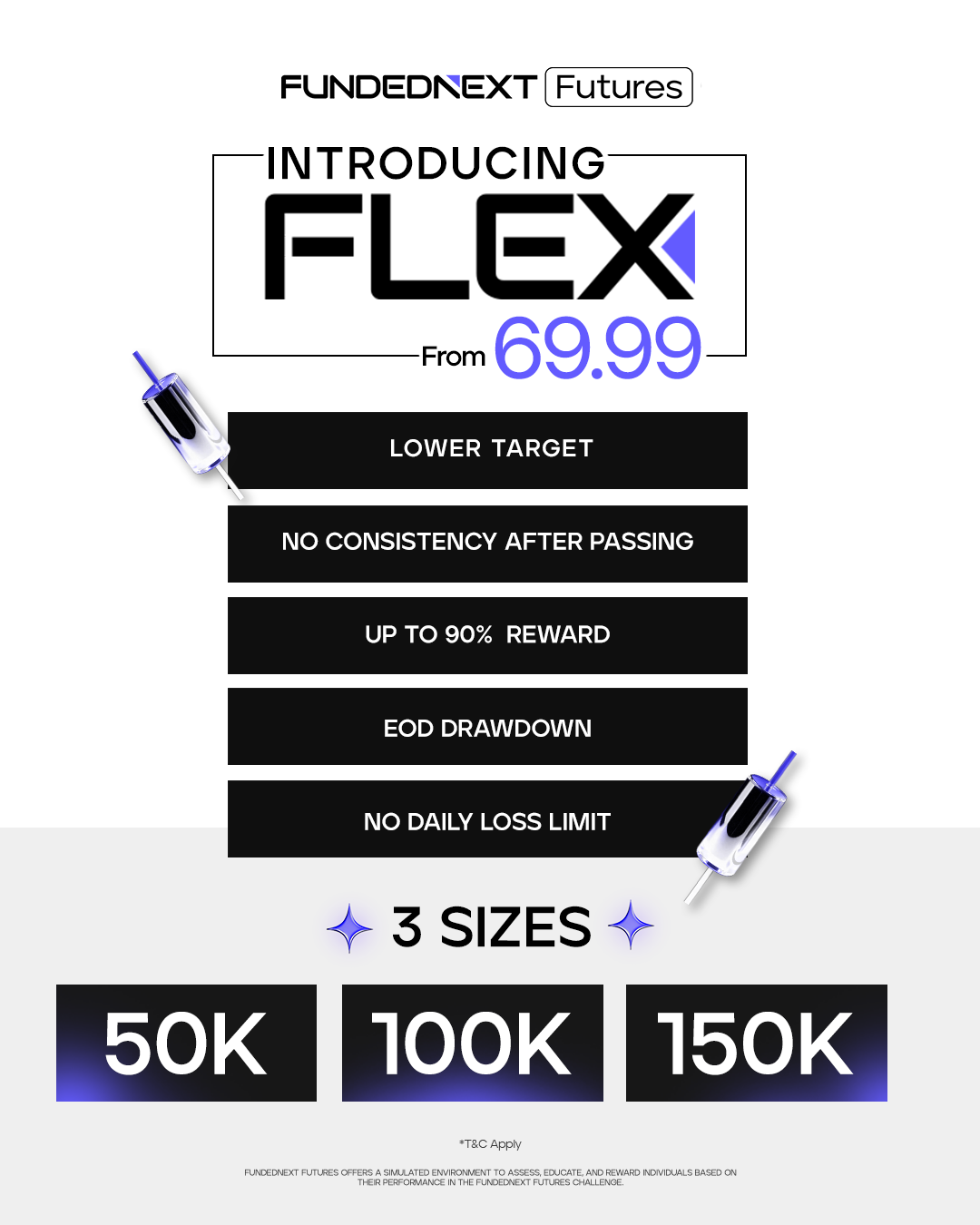
Pass the evaluation and get funded up to $200k today. 90% profit split.
Claim Discount