Analyst: prop.best Editorial Team | Last Updated: May 2026
A proprietary trading firm (prop firm) gives traders access to the firm's capital in exchange for a share of the profits. Instead of risking your own money, you pay an evaluation fee, prove you can trade profitably within risk limits, and then trade a funded account. If you profit, you keep 80–90% (sometimes 100% of the first portion). If you lose, you lose the evaluation fee — not the trading capital.
This guide covers how prop firms work, how evaluations are structured, what they cost, and how to pick the right one. If you already understand the basics, skip ahead to our interactive comparison table to compare firms side by side.
How Prop Firms Work
The modern prop firm model follows three stages:
Stage 1 — Evaluation
You pay an evaluation fee (typically $37–$150) and trade a simulated account. You must hit a profit target (e.g., $3,000 on a $50K account) without exceeding the maximum drawdown limit. Some firms use a one-step evaluation; others use two steps with different targets.
Stage 2 — Funded Account
Once you pass, you receive a funded account. You trade under the firm's risk rules with real (or simulated-live) capital. Some firms charge an activation fee at this stage ($0–$149 depending on the firm).
Stage 3 — Payouts
Profits are split between you and the firm. Most firms offer 80/20 or 90/10 splits (you keep the larger portion). Some firms let you keep 100% of your first $10K–$25K. Payouts happen weekly, biweekly, or monthly depending on the firm.
The Evaluation Process
Evaluations test two things: can you hit a profit target, and can you manage risk within defined limits? Here's what the two main evaluation types look like:
| Feature | One-Step Evaluation | Two-Step Evaluation |
|---|---|---|
| Phases | 1 | 2 (Challenge + Verification) |
| Profit Target | 6–10% of account | 8% (Phase 1) + 5% (Phase 2) |
| Time Limit | Usually none | 30–60 days per phase (varies) |
| Best For | Futures traders, aggressive styles | Forex traders, consistent styles |
| Example Firms | Topstep, Apex, MyFundedFutures | FTMO, FundedNext, The5ers |
For a deeper comparison of evaluation types, see our guide: One-Step vs Two-Step Evaluation: Pros & Cons.
What It Costs
The total cost of getting funded depends on more than just the evaluation fee. We use a metric called Total Cost of Funding (TCF) that includes everything:
| Firm | Eval Fee (50K) | Activation Fee | TCF (Best Case) |
|---|---|---|---|
| Topstep | $49/mo | $149 | $198 |
| Apex Trader Funding | $37/mo | $85+ | $122+ |
| MyFundedFutures | $50/mo | $0 | $50 |
| FTMO | ~$155 (one-time) | $0 | $155 |
See our full comparison table for pricing across all 12 firms and all account sizes.
Key Rules You Need to Know
Every prop firm has rules that, if broken, result in losing your account. The most important ones:
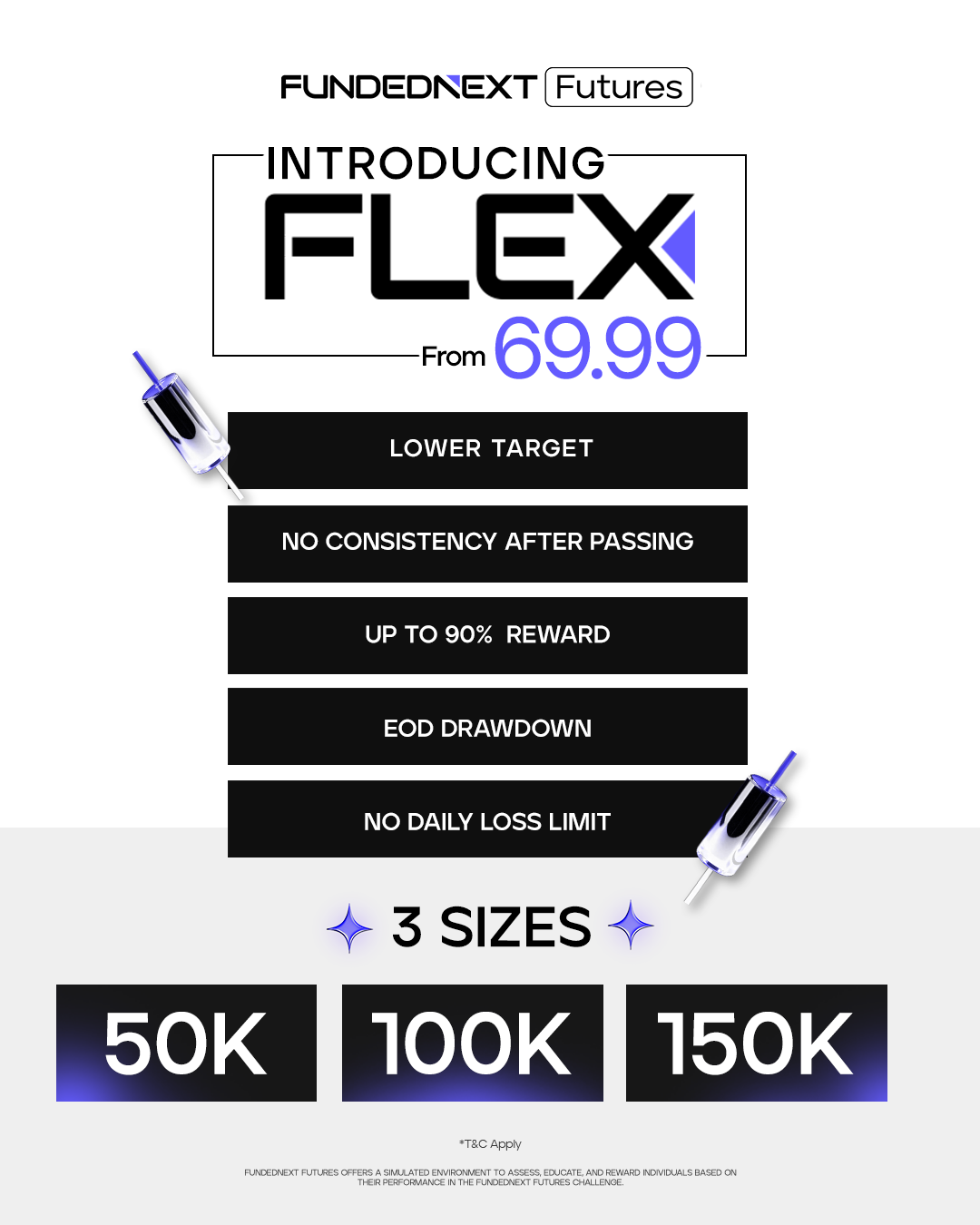
- Maximum Drawdown — The total amount your account can decline before it's closed. Two types exist: trailing drawdown (follows your equity high) and end-of-day drawdown (only calculated at the end of each trading day). EOD drawdown is significantly more forgiving. Read our full drawdown guide →
- Daily Loss Limit — Some firms cap how much you can lose in a single day (e.g., $1,000 on a $50K account). Others have no daily limit.
- Consistency Rule — Some firms require that your best day doesn't exceed 30–50% of total profits, preventing "lottery ticket" trading.
- News Trading — Some firms restrict trading during major economic announcements (NFP, FOMC, CPI).
- Scaling Plans — Some firms limit contract sizes until you've reached certain profit milestones.
How to Choose the Right Firm
The "best" prop firm depends on your trading style. Here's a quick decision framework:
- Futures traders → Topstep, Apex, MyFundedFutures, TakeProfit Trader
- Forex traders → FTMO, The5ers, FundedNext, FundingPips
- Lowest cost → MyFundedFutures ($0 activation), Apex (frequent 80%+ promotions)
- Most forgiving rules → Firms with EOD drawdown and no daily loss limit
- Fastest payouts → TakeProfit Trader, Apex, Tradeify
Use our interactive comparison table to filter firms by your specific criteria, or read our individual firm reviews for in-depth analysis.
Frequently Asked Questions
Are prop firms legitimate?
Most established prop firms are legitimate businesses. However, the industry is unregulated in many jurisdictions, and some firms have closed without paying traders (e.g., MyFundedFX in February 2026). Stick to firms with long track records and verified payout histories. Our scoring methodology weights payout reliability at 30% for this reason.
Do prop firms actually pay traders?
Yes — the top firms have collectively paid out over $1.5 billion. FTMO has paid traders since 2015, Topstep since 2012. That said, always check recent reviews before purchasing an evaluation. Firms can change their payout practices without notice.
What percentage of traders pass prop firm evaluations?
Industry-wide pass rates are estimated at 10–15%. The primary reason traders fail is poor risk management — oversizing positions, revenge trading after losses, or not understanding how drawdown is calculated.
Can I trade on multiple prop firm accounts?
Yes. Many firms allow 10–20+ simultaneous accounts. Some traders run multiple evaluations across different firms to diversify. Apex Trader Funding allows up to 20 accounts per trader.
Is prop trading the same as day trading?
Not exactly. Day trading is a strategy; prop trading is a funding model. You can day trade, swing trade, or scalp within a prop firm account — the firm provides the capital and sets the risk rules, but your trading strategy is up to you (within their permitted strategies).
Ready to compare prop firms?
Use our interactive tool to filter by price, account size, drawdown type, and platform.
Browse All Prop Firms →